
Who We Are
Over 1000 engineers, machinists, technicians, and support staff worldwide, produce over 2 million turbomachinery flow path components annually.
Our Mission
TURBOCAM exists as a business for the purpose of honoring God, creating wealth for its employees, and supporting Christian service to God and people.
TURBOCAM accomplishes this purpose by committing to excellence in the manufacture of core turbomachinery flow path components and assemblies. Specializing in 5-Axis and ElectroChemical machining and other enabling technologies, we seek to satisfy the needs of our customers for Quality, Price, Delivery, and Service.
As we interact with our customers, suppliers, and employees, we hold ourselves accountable to God’s law expressed in the Bible. We are committed to integrity in our business and personal relationships.
Why this Mission
Our Mission is a statement of who we are, what we do, and why we exist. Since I wrote it in 1993, it has guided our company policies and our behavior as we have expanded from 25 people in 1993 to over 1000 today. We display our Mission prominently, because we need to be held to it by our employees, customers, and suppliers.
In March 2020, the SARS-CoV-2 virus shut down much of the aviation industry and much of the rest of the world economy. With orders dropping by over 80%, TURBOCAM was faced with the greatest threats in its 35-year history. Could we protect jobs, pay our bills, and look after our customers? In previous years we had stared down a 25% and a 40% drop without cutting jobs. But this big one caused us to lose 150 jobs out of a force of 1000. This is where our Mission guided us in balancing the needs of employees, customers, banks and shareholders as we faced an uncertain future with confidence in God’s provision.
Looking back four years later, this private family-owned business absorbed short term losses to protect jobs for the long term good of our staff and customers. We maintained and grew the confidence of the finance community by not accepting government handouts. Employees were able to spend time serving their families and friends. Many people whose jobs we were not then able to maintain returned later to Turbocam. For others we offered them our support as they sought new employment.. Though cash got scarce, we invested in building inventories, keeping our staff working and enabling our customers to have ready access to products as they recovered quite rapidly in 2021.
TURBOCAM is now at Year 40 and back to the 1000+ level, and growing healthily!
I started this company as a means of making a living while expressing the virtues of the Kingdom of God that were preached by Jesus Christ. It is an experiment to “honor God, create wealth for our employees, and support Christian service to God and people.” In experiments, not all data fall neatly on lines or curves.
A customer once told me that my quote was “not a very Christian price.” Others try to drag us into a world of “success” that is measured only by financials.
About 2 million pieces of valuable metal travel around our factories every year, putting 1000 people to work in USA, UK, India and Romania. Thousands more benefit from this economic activity in churches, schools, colleges, hospitals, orphanages, and recovery ministries. For example, clean water systems have been installed in over 150 locations in India.
When we see a new opportunity, we don’t only see blades and kilowatts. We often find ways to deliver the best quality to our customers while involving people who need an opportunity.
I have learned that in a business, God comes first. God has blessed our efforts and made us a growing company with dedicated employees, loyal customers and many suppliers who enjoy being associated with us. That feels a lot like success. If you would like to experiment along with us, please let us know how we can help. We would love to share our experiences with you. Thanks for becoming part of our world.
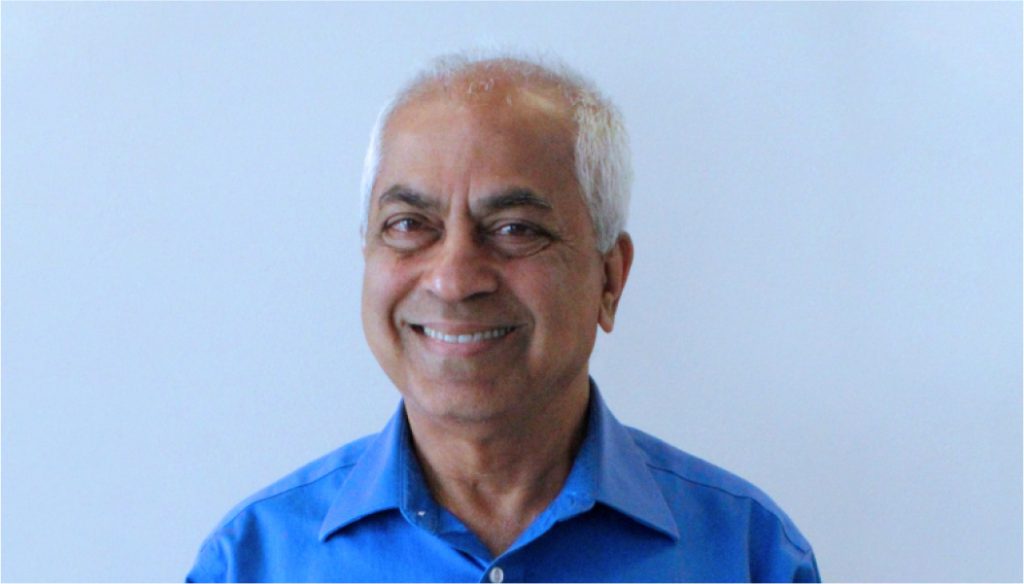
Marian B. Noronha
You’ll hear 34 different languages spoken at our facilities around the world.

- English
- French
- Spanish
- German
- Portuguese (Brazilian)
- Portuguese (Portugal)
- Italian
- Vietnamese
- Tagalog
- Japanese
- Indonesian (Bahasa)
- Arabic
- Russian
- Chinese (Mandarin)
- Lakota
- Thai
- Romanian
- Hungarian
- Dutch
- Gypsy
- Sign Language (ASL)
- Polish
- Hindi
- Konkani
- Bengali
- Gujarati
- Kannada
- Malayalam
- Marathi
- Nepali
- Odia
- Tamil
- Telugu
- Urdu